Surya Siddhanta, Drik Siddhanta and Ketaki Paddhati
Jyotish Sarathi is built around a setting most astrology software does not expose at all: which computation method produces the planetary longitudes. Choose Surya Siddhanta for the classical algorithm, Drik Siddhanta for Swiss Ephemeris positions that match the observed sky, or Ketaki Paddhati, the method the app pairs with the Nepal Panchanga — then regenerate the same chart under another and compare.
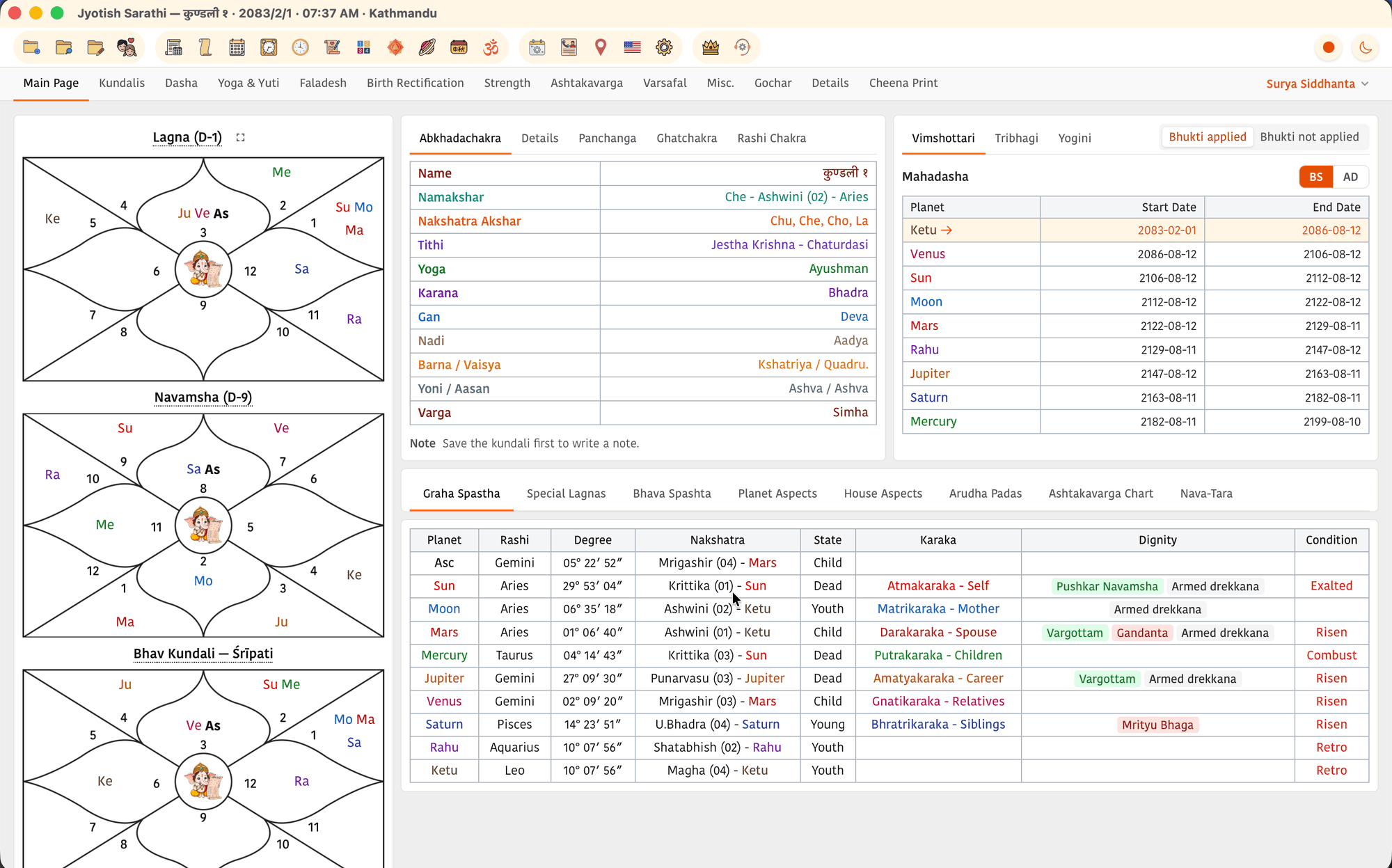
Key takeaways
- Three methods, switchable: Surya Siddhanta (Sabeeja), Drik Siddhanta (N.C. Lahiri) and Ketaki Paddhati (Nepal Panchanga).
- Drik Siddhanta uses the Swiss Ephemeris, covering 1768–2293 AD.
- 11+ ayanamsha systems on top, including Lahiri (Chitrapaksha), Raman and Krishnamurti.
- Outer planets (Uranus, Neptune, Pluto) available in Drik Siddhanta mode.
- Surya and Drik Siddhanta are on every plan; Ketaki Paddhati is on Pro plans.
The setting, and what it actually changes
| Surya Siddhanta | Drik Siddhanta | |
|---|---|---|
| Positions from | Classical mean-motion tables plus correction steps | Swiss Ephemeris |
| Matches the observed sky | Approximately; drifts over centuries | Yes |
| Outer planets | Not available | Uranus, Neptune, Pluto |
| Best for | Traditional panchanga work, lineage consistency | Transits, eclipses, KP, verification |
On most charts the rashi placements agree between the two. What moves is the fine detail — nakshatra pada, the dasha balance at birth, and the exact dates of slow transits. The full comparison sets out which readings are sensitive.
Where does Ketaki Paddhati fit?
Ketaki is a paddhati, not a third siddhanta. In the app it is offered as Ketaki Paddhati with the Nepal Panchanga, for charts that need to agree with the Nepal Panchanga. It is available on Pro plans.
Ayanamsha is the second dial
The siddhanta decides the tropical longitude; the ayanamsha converts it to the sidereal longitude Vedic astrology uses. Both settings matter, and in practice the ayanamsha choice usually moves a chart more than the siddhanta choice does. Eleven or more systems are available so you can match your school — see what ayanamsha is.
Why this is exposed rather than hidden
Two programs can disagree about a chart for exactly three reasons: the siddhanta, the ayanamsha, or the birth-place coordinates and time zone. Software that hides the first two leaves you unable to explain a disagreement. Exposing them turns an argument about who is right into a check anyone can perform — the reasoning is documented on the methodology page.
Frequently asked questions
Can I switch siddhanta after generating a chart?
Yes. Change the setting and regenerate; the same birth data produces the chart under the other method so you can compare them directly.
Is the siddhanta setting a premium feature?
Only Ketaki Paddhati is on Pro plans. Surya Siddhanta, Drik Siddhanta and the ayanamsha selection are on every plan.
Which one should I use?
Use what your lineage or your client's panchanga uses, and stay consistent. Prefer Drik Siddhanta for transit, eclipse and KP work, or whenever you want to verify against the observed sky.